If you work with cameras — bringing up modules, running road tests, building vision systems — you have watched the numbers climb year after year: 2 MP sensors giving way to 8 MP, 30 fps giving way to 45 or 60, HDR becoming the default. The cable between camera and processor has to keep up, and GMSL, the single-coax link that carries video, control and even power through one thin cable, has grown through generations to stay ahead of the sensors it serves. GMSL3 is the generation built for today’s high-resolution, high-frame-rate cameras. In this post we look at why GMSL3 appeared, how it differs from GMSL2, what it actually buys you, and how our ECFG-R2-96792 development platform puts a 12 Gbps GMSL3 link on your bench.
| Feature | GMSL2 | GMSL3 |
|---|---|---|
| Forward-link data rate | Up to 6 Gbps | Up to 12 Gbps |
| Comfortable payloads | 2–4 MP sensors, 4K30-class video | 8 MP-class sensors at full frame rate, 4K90-class video, multi-sensor aggregation |
| Video transport | Pixel mode: the link decomposes video into pixels plus control data | Adds tunnel mode: the native MIPI CSI-2 stream is transported transparently |
| Backward compatibility | — | GMSL3 devices commonly also run GMSL2 rates (12/6/3 Gbps) |
| Link robustness | Error detection on control data | FEC and CRC with equalization engineered for 12 Gbps operation |
| Cable and connector | Single coax (or STP), FAKRA, POC | Unchanged — same single coax, same connector philosophy |
| Typical chip pairing | MAX9295 / MAX96717 + MAX9296 | MAX96793 + MAX96792A |
The architectural change is tunnel mode. In GMSL2’s pixel mode, the deserializer unpacks the incoming stream into pixels and control data and reassembles them for the host interface. GMSL3’s tunnel mode instead wraps the camera’s native MIPI CSI-2 stream and carries it through the link untouched: embedded metadata, HDR sub-frame structure and sensor-specific payload formats all arrive exactly as the sensor produced them. For engineering teams this is more than convenience — you develop against the sensor’s true output, not a link-processed reconstruction of it.
GMSL3 silicon is also pragmatic. A GMSL3 serializer such as the MAX96793 operates at 12 Gbps (GMSL3) as well as at 6 Gbps and 3 Gbps (GMSL2) rates, and the MAX96792A deserializer accepts both GMSL3 and GMSL2 links. A GMSL3-capable platform therefore covers both generations: your legacy GMSL2 modules and your new GMSL3 designs run on the same bench.
ECFG-R2 is EyeCloud’s two-channel open platform for camera module development and road testing, built on the NVIDIA Jetson Orin Nano. The -96792 variant carries the MAX96792A GMSL 3 deserializer (up to 12.0 Gbps) onboard, making it the model to pick when your camera modules speak GMSL3.
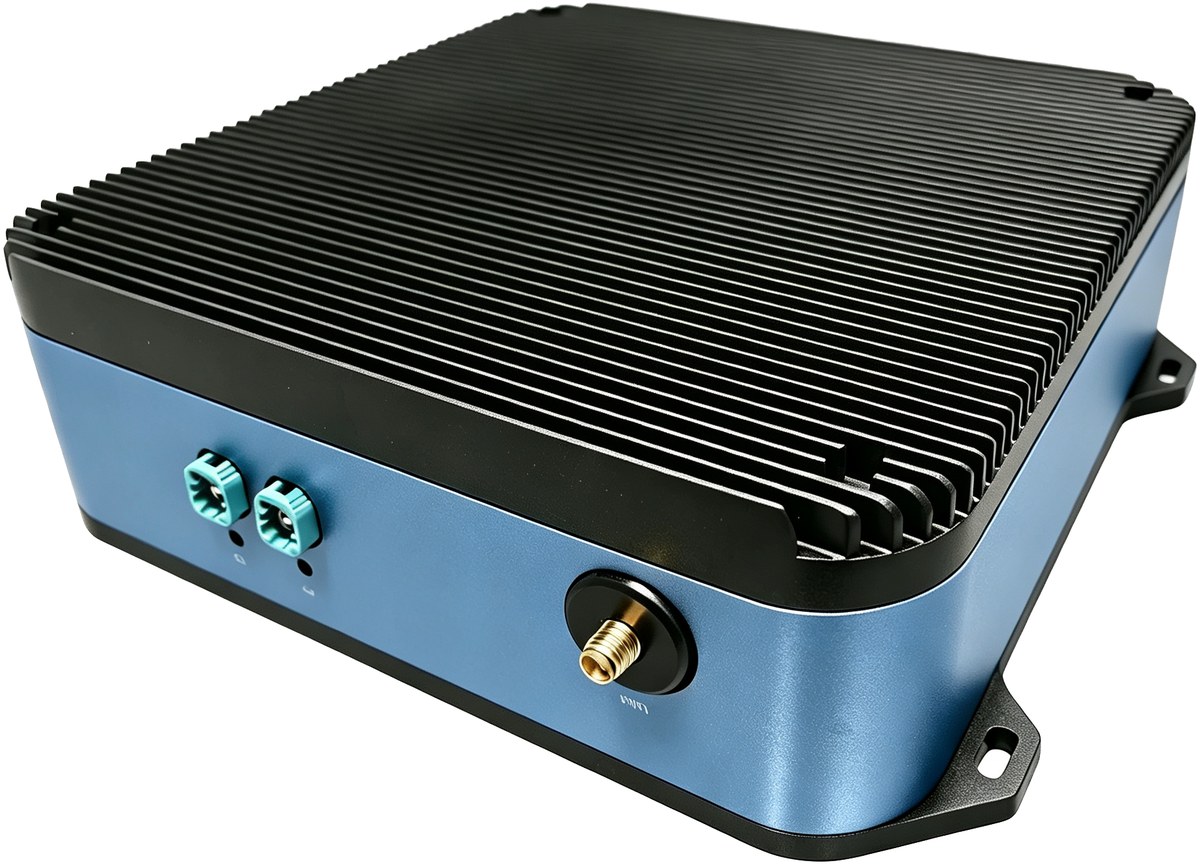
As part of the ECFG series, it is built around three ideas: low-code bring-up of your own camera modules, high-bandwidth data transfer, and multi-brand deserializer adaptation (GMSL 2/3 and FPD-Link). You keep the module design in your hands; the platform lights it up.
Key specifications:
The development workflow is deliberately low-code: initialize your sensor and SerDes chips from configurable scripts instead of writing a driver stack from scratch, read and write device registers over I2C passthrough, control frame-sync signals, switch and monitor POC power per port, and capture raw data from both linear and HDR streams via virtual channels. UGrab, the interactive software shipped with the platform, gives you a visual workflow for all of it — the same low-code approach we described in this UGrab deep dive.
On the GMSL3 side, ECFG-R2 has been validated with the MAX96793 camera-side GMSL 3 serializer, and the validated sensor list includes Sony’s 8 MP-class IMX728 and IMX735, the HDR IMX490, onsemi AR0830 / AR0820 / AR0234 and SmartSens SC8238. Some customer-provided camera models are not listed — contact us for the latest compatibility list.
Not on GMSL3 yet? The same ECFG-R2 base is available with three other onboard deserializers: ECFG-R2-9296 (MAX9296, GMSL 2, default), ECFG-R2-954 (DS90UB954-Q1, FPD-Link III) and ECFG-R2-9702 (DS90UB9702-Q1, FPD-Link IV). Same compute, same FAKRA inputs, same software — you simply pick the link your camera speaks. All four options are listed on the ECFG-R2 product page.
If you are designing with 8 MP-class sensors, chasing higher frame rates or capturing HDR raw streams, the 6 Gbps ceiling is exactly the constraint GMSL3 removes — and the ECFG-R2-96792 is the fastest way to start working against it: a complete, Jetson-powered development and road-test platform with the MAX96792A GMSL 3 deserializer onboard, ready for your own camera modules.


